Costumes

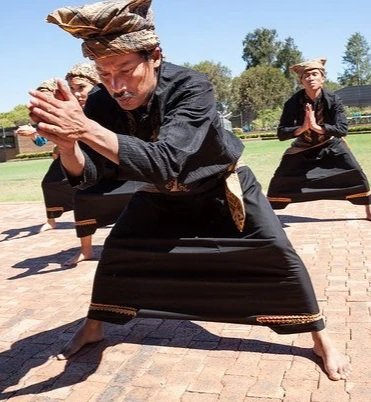
Destar​

Destar is worn as part of a martial art costume, as a headpiece and a belt. Batik fabric is used to make a headpiece shaped a bit like a buffalo horn, which is also used on the roofs of the Minangkabau region in Sumatra.
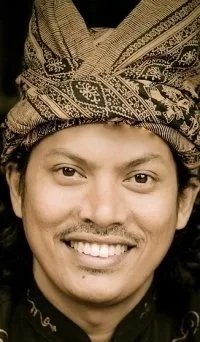
Smiling man wearing a traditional Indonesian patterned headwrap

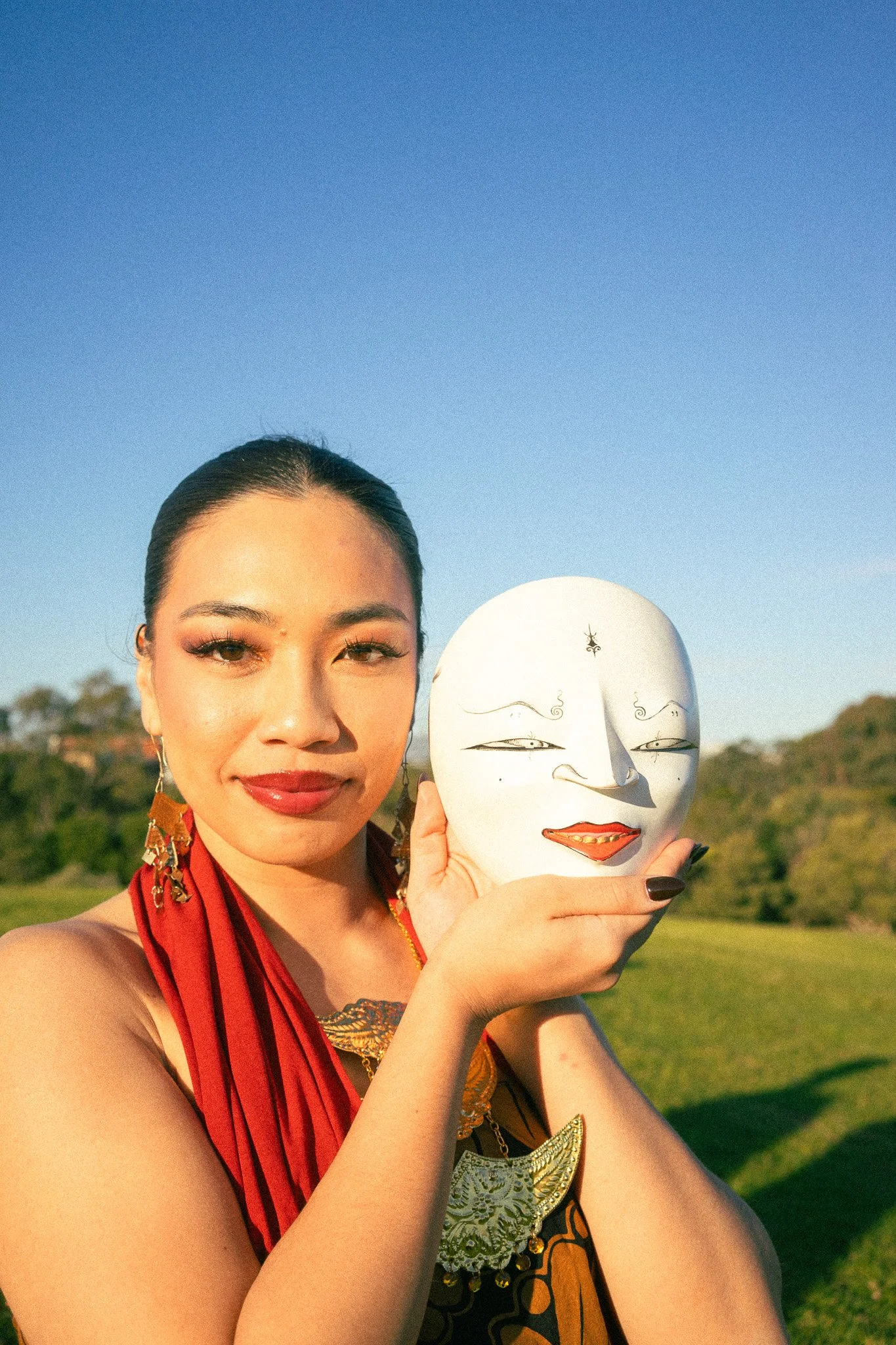
Topeng mask

Topeng masks are carved from wood and used in Javanese and Balinese dances. The white topeng mask is often used to represent graceful, serene, wise or noble characters.
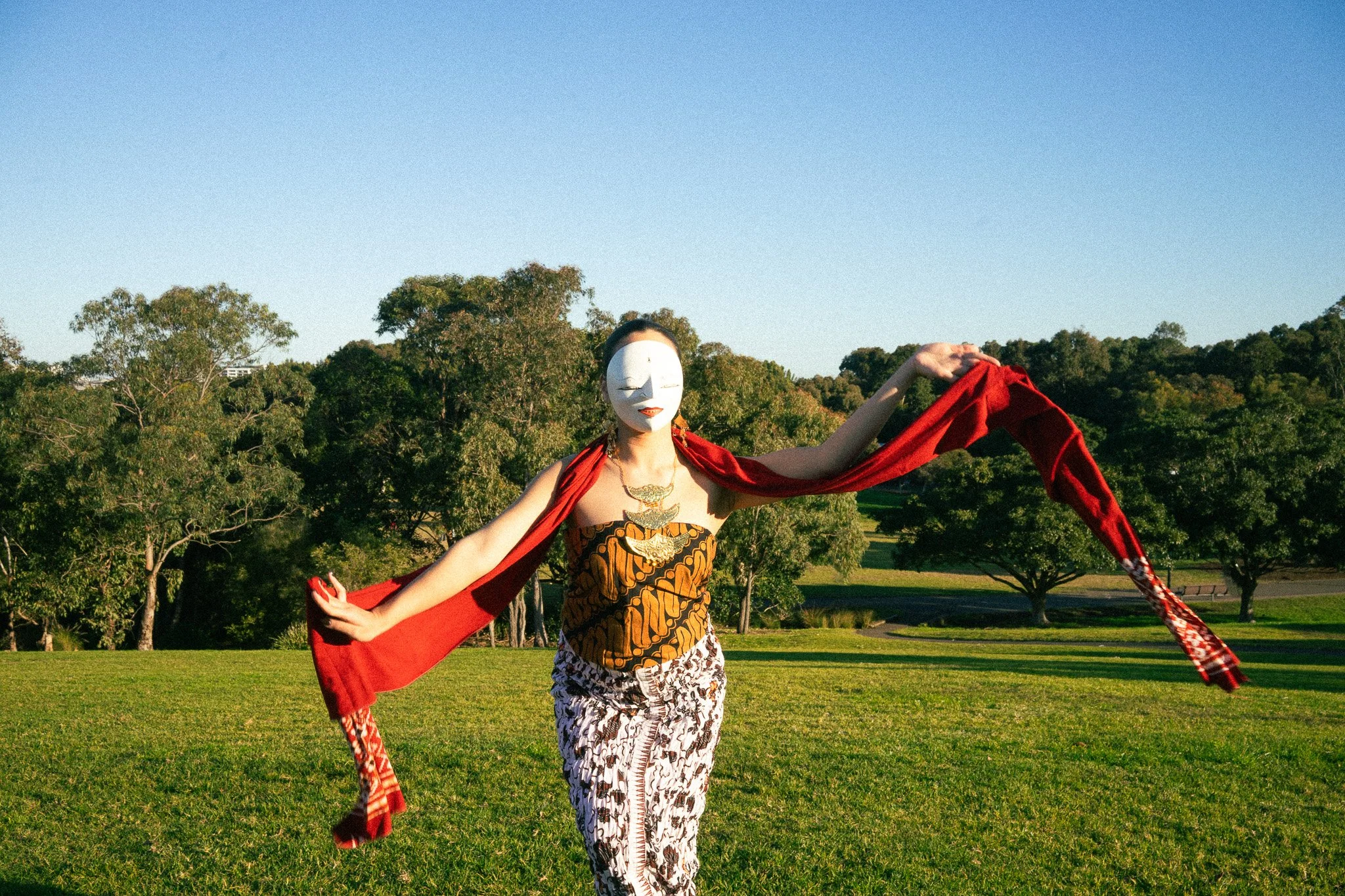
Dancer wearing a white mask, patterned pants, a black and orange top, and a red shawl, standing in a grassy park with trees in the background on a sunny day.
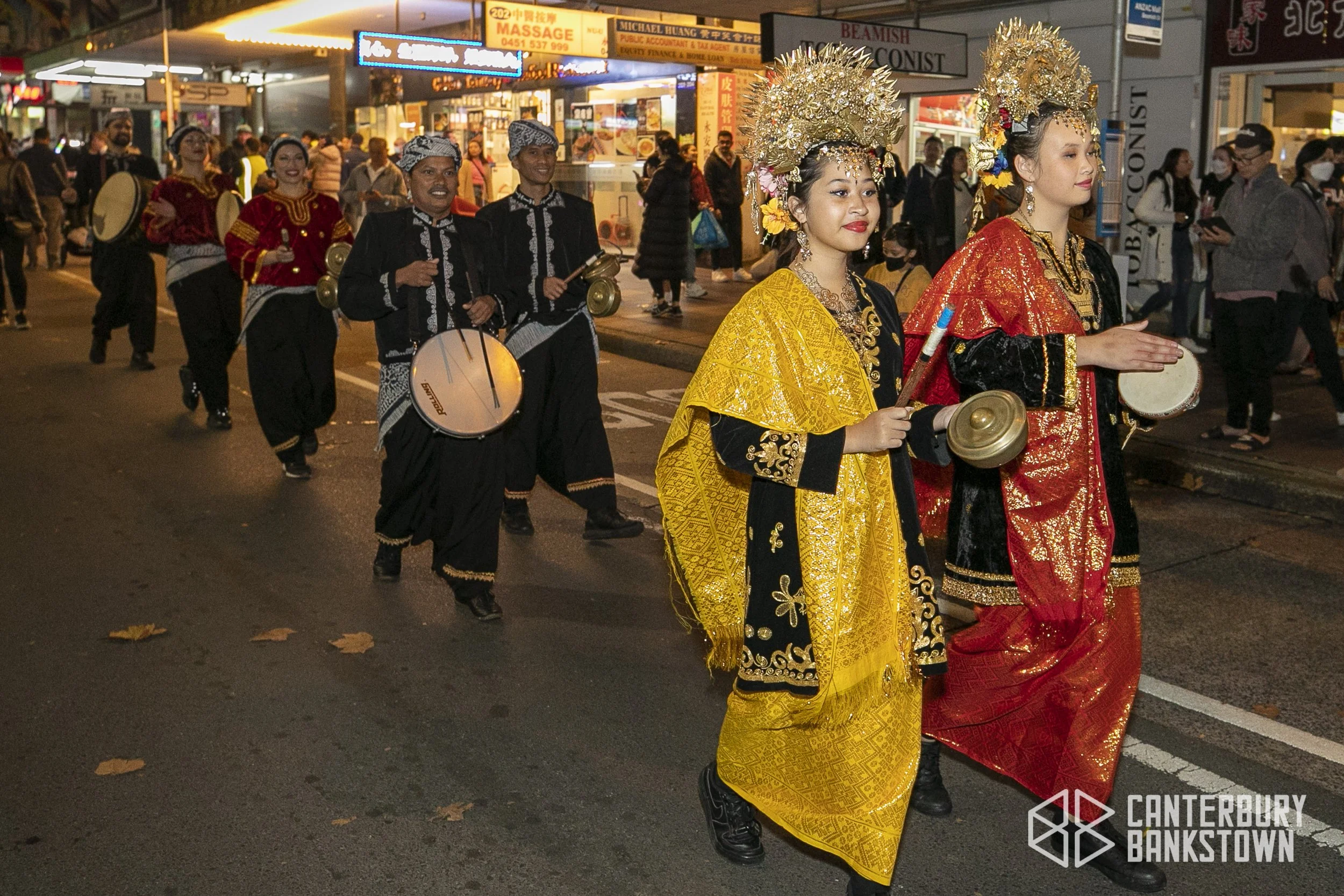
A group of people dressed in traditional costumes, including two women in ornate gold and red outfits with headpieces, leading a parade on a city street at night. Behind them, men wearing black outfits with white patterns are playing drums and cymbals, performing as part of the procession. The street is busy with spectators and shops illuminated with neon signs.

Kebaya

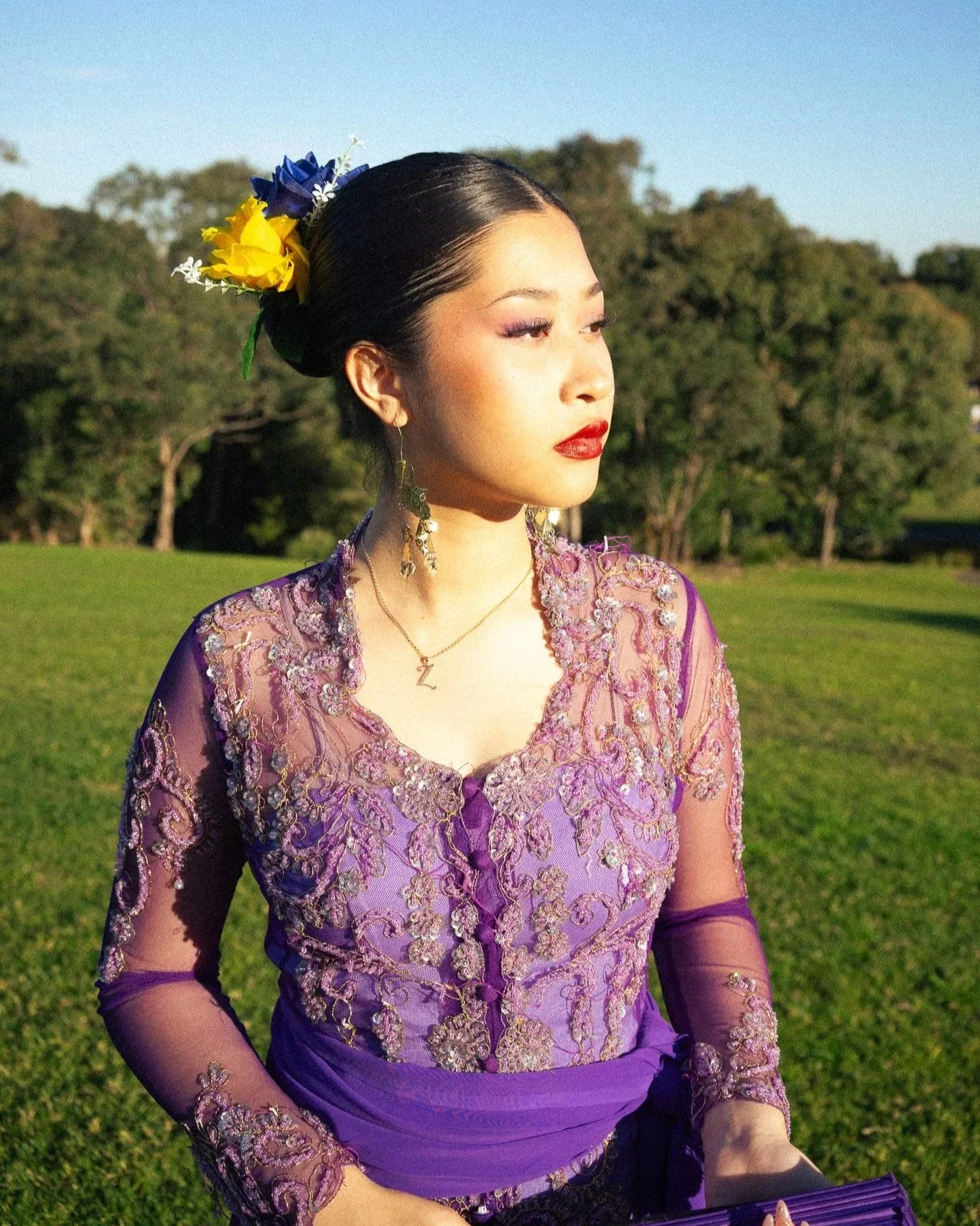
The kebaya is a traditional long blouse, often worn over a sarong. With many different patterns, depending on region and family traditions, the kebaya is known for its beauty and highly intricate lace and embroidery.
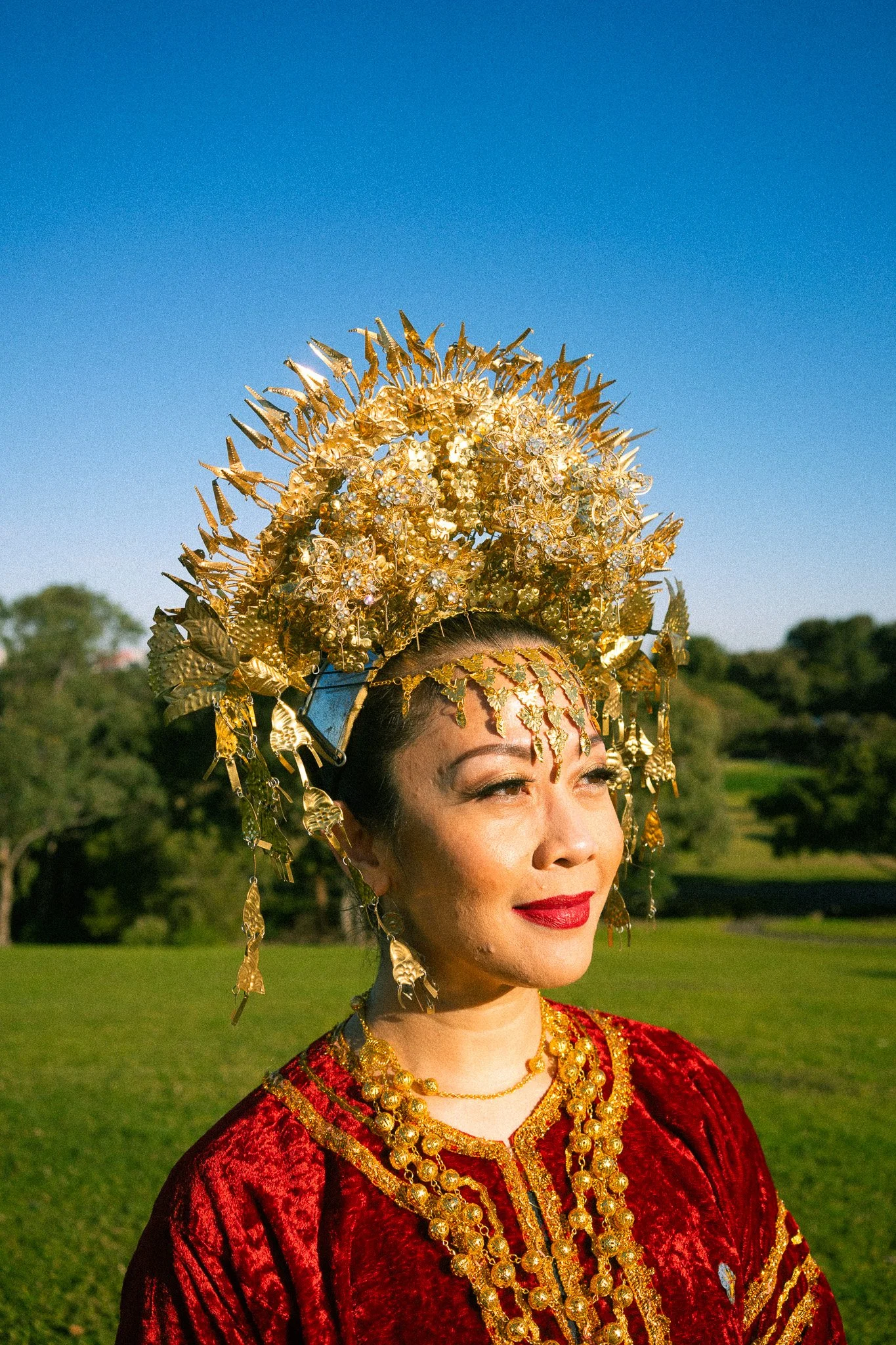
A woman in traditional attire with a large, ornate gold headdress and matching jewelry, standing outdoors on a sunny day with a clear blue sky and green trees in the background.
A woman wearing a purple embroidered dress with flowers and jewelry, standing outdoors in a grassy area with trees in the background, during daytime.
A woman in traditional Indonesian attire holding a decorative mask with a smiling face, outdoors during the daytime with a clear blue sky and greenery in the background.
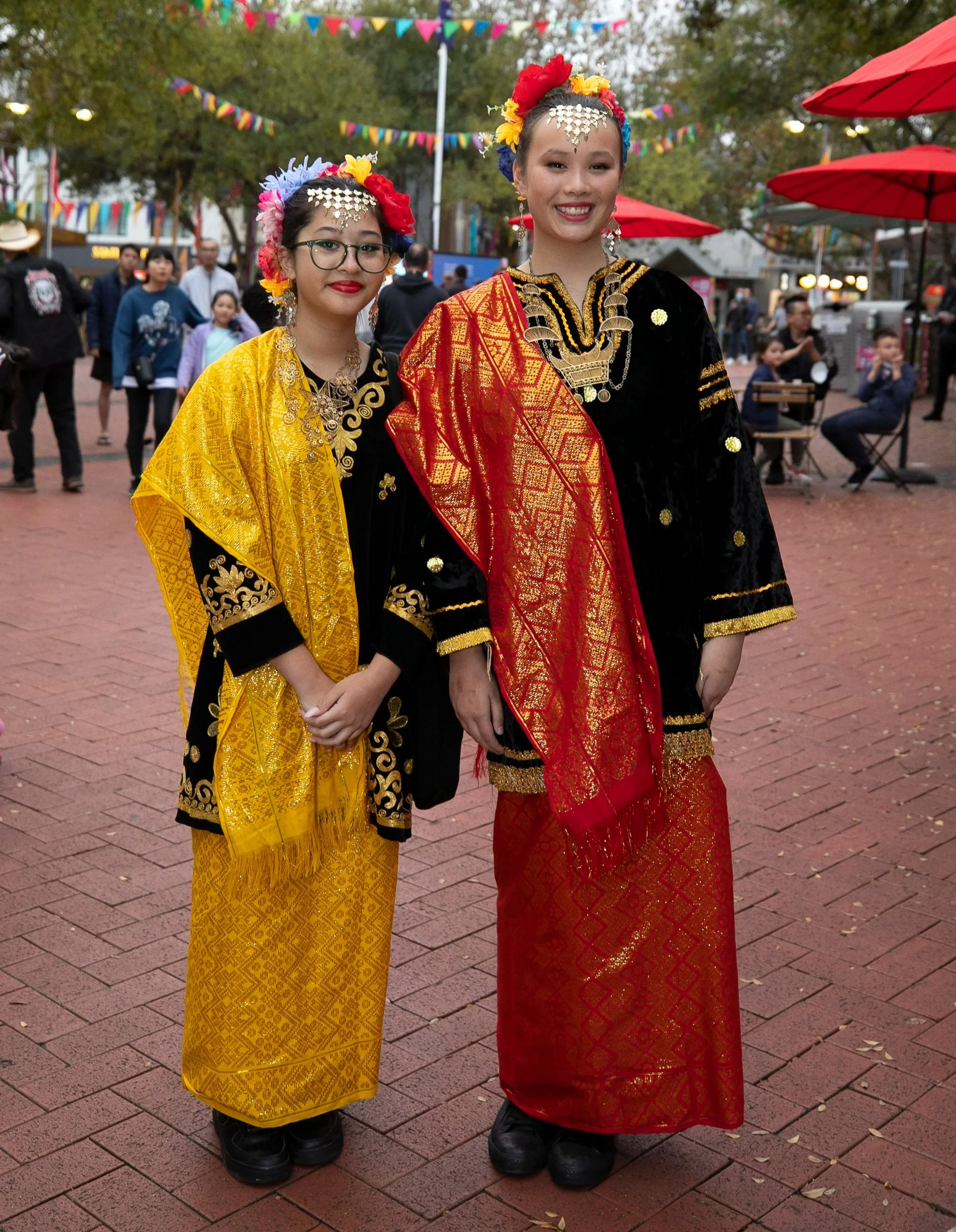
Two women dressed in traditional Indonesian attire with vibrant yellow and red shawls, standing outdoors on a red brick pavement during a festival or celebration, with colorful banners and other people in the background.
A group of men dressed in traditional Indonesian black clothing practicing a martial arts or dance move outdoors on brick pavement.
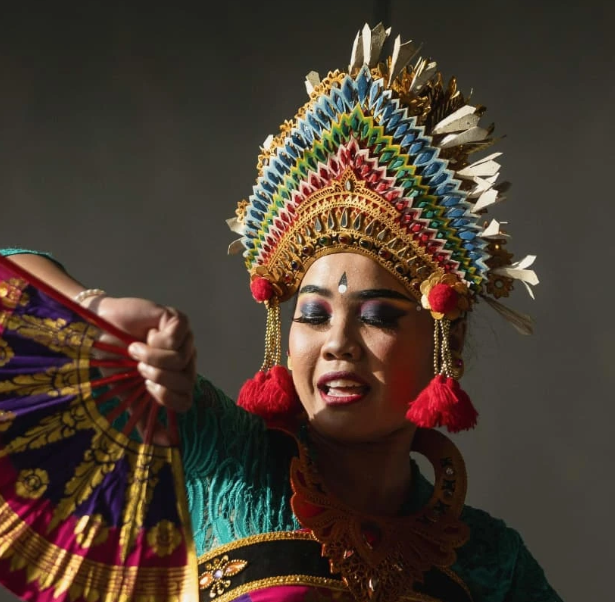
A performer dressed in elaborate traditional costume with a large, colorful feathered headdress, holding a decorated fan

Galembong Pants

Galembong are used by dancers performing Randai dances. They are made from special material that creates sounds when the pants are stretched and then hit or clapped by a dancer’s hands. The hitting of the pants is known as tapuak galembong.
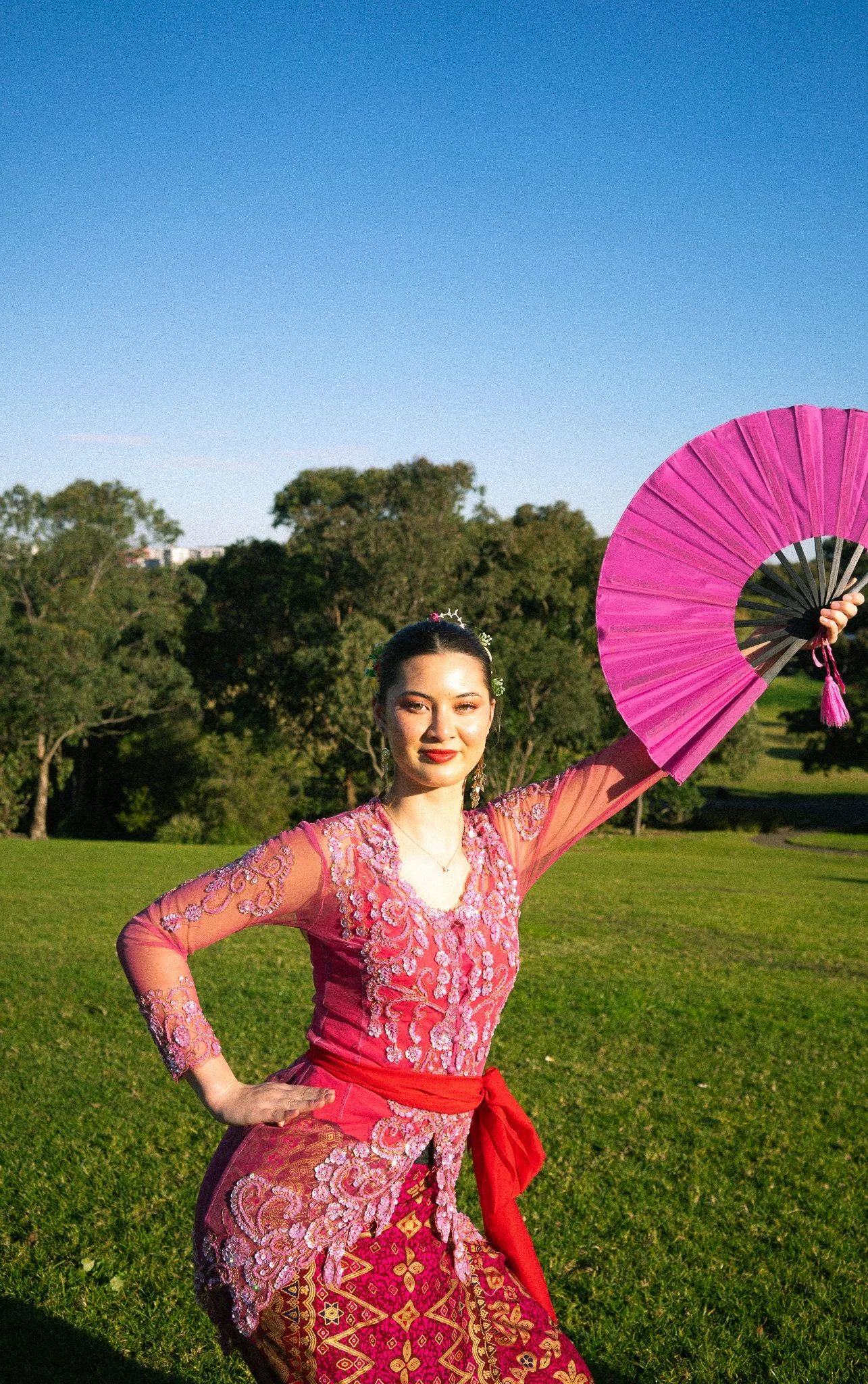
A woman dressed in traditional Indonesian attire holding a pink fan outdoors in a grassy park with trees and a clear blue sky.